Sunday, 20 May 2012

Arabic Henna Design

Arabic henna design


 Arabic Henna Design
Arabic Henna Design
Arabic Henna Design
Arabic Henna Design
Arabic Henna Design
Arabic Henna Design
Arabic Henna Design
Arabic Henna Design
Arabic Henna Design
Arabic Henna Design
>
Indo Arabic Henna Design   
Arabic henna design for eid ul adha

Henna Design

Henna Design

Henna Design
Henna Design
Henna Design
Henna Design
Henna Design
Henna Design
Henna Design
Henna Design
Henna Design
Henna Design
how to do a henna design
I
indaian bridal mehndi design 

HennaTattoo Design

Henna tattoo design


Henna Tattoo Design
Henna Tattoo Design
Henna Tattoo Design
Henna Tattoo Design
Henna Tattoo design
Henna Tattoo Design
Henna Tattoo Design
Henna Tattoo Design
Henna Tattoo Design
Henna Tattoo Design
Henna Tattoo Design
How to Give Henna Tattoos : Practicing Henna Tattoo Designs on a Model


Wednesday, 2 May 2012

Mushtaq Ahmed

Mushtaq Ahmed Biography
Mushtaq Ahmed (Urdu: مشتاق احمد) (born 28 June 1970) is a retired Pakistani cricketer who specialised as a leg spin bowler. He was known for his hard-to-pick googly. He memorably trapped Graeme Hick in front with one during the 1992 World Cup final. He was a Wisden Cricketer of the Year in 1997. Nevertheless, despite taking over 150 One Day International and Test wickets, he hasn't played international cricket since October 2003. He is now the spin bowling coach for the England Cricket Team.
However, he has played a lot of county cricket in England, including for Somerset and Surrey earlier in his career and more recently for Sussex.
In 2003, Mushtaq was the leading wicket taker in county cricket, finishing the season with 103 and inspiring Sussex to its first County Championship title. Following this, he was recalled by Pakistan but was soon dropped for being ineffective. In the 2004 season, Mushtaq was again the leading wicket taker in English county cricket with 84 scalps, but with Danish Kaneria's emergence as Pakistan's first-choice leg spinner, Mushtaq's international career was over.
In December 2006, the PCB appointed Mushtaq as assistant coach of the Pakistan team.[1] He acted as interim coach for team's final game of the 2007 World Cup following the death of Bob Woolmer.[2]
In 2006, Mushtaq (or "Mushy" as he is best known to Sussex fans) took 102 wickets as Sussex once more won the County Championship, as well as the C&G Trophy. He began the last Championship match of the season, against Nottinghamshire, on 89 wickets, but a haul of 13 in the match (including a career-best 9-48 in the second innings) took him past the hundred mark once again.
In 2007, Sussex won the County Championship for the second time in two years, again helped greatly by Mushtaq, who took 90 wickets.
Mushtaq Ahmed
                                Mushtaq Ahmed               
                               Mushtaq Ahmed                           
                      Mushtaq Ahmed                
                     Mushtaq Ahmed                  
                     Mushtaq Ahmed                 
                    Mushtaq Ahmed                                    
                     Mushtaq Ahmed                               
                                         
                     Mushtaq Ahmed
                                                                                               
Mustaq Ahmed&Saqlain Mushtaq Tribute  
Mustaq Ahmed's Magic Delivery!
 

Imran khan

Imran Khan Bography
  Imran was part of a well-educated family. His parents believed that their
children should get the best of education, and become something. Imran's parents
have believed this and followed through with it, and that is why Imran's sisters
are so successful today. His older sister Robina is an alumnus of the LSE and
has a senior position in the United Nations in New York; his other sister Aleema
has a master's degree in business administration and runs a successful business;
Uzma is a highly qualified surgeon is working in a Lahore hospital; while his
other sister Rani is a University graduate who coordinates charity work. When it
was time for Imran to go attend a college, he went to the prestigious public
school in Lahore, the Aitchison College. There he was by far the best player on
his team, being a very fine batsmen. He was still though quite far from becoming
the best in the world. As Imran grew older, his interests went from being a
batsmen to being a fast bowler.
When sixteen, Imran made his debut for Lahore. Imran's cousins Javed Burki, and
Majid Khan were a great part of cricket therefore when he made his test debut
people thought that he made it because his family was on the Pakistan's Cricket
Team. (Nepotism)
 Later, Imran had to put cricket to the side and focus more on his studies.
Undoubtedly he was back again at the age of eighteen. He played admirably which
resulted in him moving to England as he was chosen to play for a private school
there.
 As the year 1971 approached, he made his test debut while visiting England.
During this tour, he was fined many times by the management because he was
looked upon by his peers as being a very snobby and wild player. Also on this
tour, Imran did not play as well. Because of his "not so good" bowling, Pakistan
was costed to settle for a draw. This was the only test match on the tour.
 When Imran was twenty-one, he was admitted in the Oxford University. For three
years he studied economics and politics. In 1974 Pakistan toured England and
therefore he was selected because of his form for Oxford University and his
experience with speaking English. He had not succeeded to make a big mark
because all three of his tests were drawn.
 In 1976 Imran returned to Pakistan after being away for four years. During the
1976-77 season, Imran got a place in the Pakistan cricket team. He had impressed
the team with his fantastic bowling. Later he moved to play with Sussex. The
biggest reason for Imran to do this was because of his love affairs with the
nightlife of London. He was quite angry at Worcester (a team he played for
before he played for Sussex), because of the racism he found there. During the
time he had been playing for other teams, Imran had become quite a big star.
Everyone was able to see that this guy had talent and played very well. At this
point, not only was he playing well, but had basically become a superstar.
  Imran continued to play for Sussex, because he enjoyed it there. At this point
he had become the "father" of the reverse swing. His most famous partner was
Sarfaraz Nawaz, in which the partners could make a lot of runs.
  Soon after, under the orders of the top official, Imran came back to Pakistan
to play test cricket for the series against India. During this match, Imran hit
two sixes and a four with only seven balls remaining. Because of Imran's huge
success, one could easily say that Imran was one of the most adored cricketer
through the land at this point.
 During the early 80's Imran was not only at his cricketing peak, but had quite
a few relations with women. He had a relationship with Susannah Costantine,
ex-model Marie Helving, and artist Emma Sargeant. Some of his relations ended
simply because of difference in culture and because of the busy and travelling
life of Imran. He brought some of his relationships back home to Pakistan in
which he was frowned upon because he was an individual of Muslim faith.
 When Imran was thirty, he became the captain of the Pakistan cricket team. He
lead them to a victory against England in their second test match.
 During the years of his captaincy, Imran had broken his shin. Even though this
was so, Imran continued to bowl, whether there was pain or not. Because of his
injury, Imran was able to put bowling to the side and concentrate more on his
batting. Imran improved his batting greatly which led him to his first century
in a one day match.
 In 1987, Imran decided to retire from cricket. Javed Miandad took his place.
Because Pakistan's best captain was gone; the team was in somewhat of crisis.
President Zia put a lot of pressure on Imran, therefore he was back as a captain
in 1988.
In 1992, the world cup final was Imran's exit from cricket. He led Pakistan to a
great victory over India. Pakistan had won the World Cup. It was time for Imran
to retire, which brought a lot of grief to Pakistan. He ended his career with an
outstanding score of 3807 runs and 362 wickets in only test matches. During his
career, Imran had turned the Pakistan cricket stars into the stars they are
today. The day that Imran retired was a very big day. So big that the President
of that time, Zia personally tried to stop him from retiring. Imran said that he
wanted to retire at the highest point of his popularity so that people would be
able to remember him forever.4 He wanted his name to be in all hearts and be
recognized for all his accomplishments. Imran had officially ended his career as
a cricketer and is truly remembered by a Imran khan.
                                          Imran Khan
Imran Khan
Imran Khan
Imran Khan
Imran Khan
Imran Khan
Imran Khan
Imran Khan
Imran Khan
Imran Khan
Imran et Khan - 'A more consistent allrounder than the rest' Legends of CrickPart 2
Imran khan at his
 best

Umar Gul

Umar Gul Biography
Full name Umar Gul
 Born April 14, 1984, Peshawar, North-Western Frontier Province
 Major teams Pakistan, Gloucestershire, Habib Bank Limited, Kolkata Knight Riders, North West Frontier Province, North West Frontier Province Panthers, Pakistan A, Pakistan International Airlines, Peshawar, Peshawar Panthers, Western Australia
 Playing role Bowler
 Batting style Right-hand bat
 Bowling style Right-arm fast-medium
The least-hyped but most successful and assured Pakistan pace product of the last few years, Umar Gul is the latest in Pakistan's assembly-line of pace-bowling talent. He had played just nine first-class matches when called up for national duty in the wake of Pakistan's poor 2003 World Cup. On the flat tracks of Sharjah, Gul performed admirably, maintaining excellent discipline and getting appreciable outswing with the new ball.
 He isn't express but bowls a very quick heavy ball and his exceptional control and ability to extract seam movement marks him out. Further, his height enables him to extract bounce on most surfaces and from his natural back of a length, it is a useful trait. His first big moment in his career came in the Lahore Test against India in 2003-04. Unfazed by a daunting batting line-up, Gul tore through the Indian top order, moving the ball both ways off the seam at a sharp pace. His 5 for 31 in the first innings gave Pakistan the early initiative which they drove home to win the Test.
Unfortunately, that was his last cricket of any kind for over a year as he discovered three stress fractures in his back immediately after the Test. The injury would have ended many an international career, but Gul returned, fitter and sharper than before in late 2005. He returned in a Pakistan shirt against India in the ODI series at home in February 2006 and in Sri Lanka showed further signs of rehabilitation by lasting both Tests but it was really the second half of 2006, where he fully came of age. Leading the attack against England and then the West Indies as Pakistan's main bowlers suffered injuries, Gul stood tall, finishing Pakistan's best bowler.
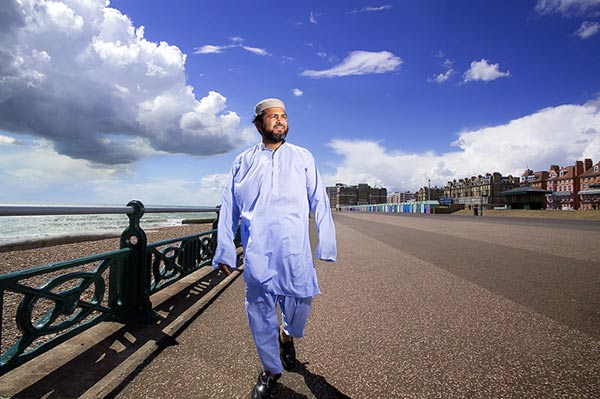
Since then, as Mohammad Asif and Shoaib Akhtar have floundered, Gul has become Pakistan's spearhead and one of the best fast bowlers in the world. He is smart enough and good enough to succeed in all three formats and 2009 proved it: he put together a patch of wicket-taking in ODIs, on dead pitches in Tests (including a career-best six-wicket haul against Sri Lanka) and established himself as the world's best Twenty20 bowler, coming on after the initial overs and firing in yorkers on demand.
He had hinted at that by being leading wicket-taker in the 2007 World Twenty20; over the next two years he impressed wherever he went, in the IPL for the Kolkatta Knight Riders and in Australia's domestic Twenty20 tournament. Confirmation came on the grandest stage: having poleaxed Australia in a T20I in Dubai with 4-8, he was the best bowler and leading wicket-taker as Pakistan won the second World Twenty20 in England. The highlight was 5-6 against New Zealand, the highest quality exhibition of yorker bowling. He is not a one-format pony, however, and will remain a crucial cog in Pakistan's attack across all formats
Umar Gul.
Umar Gul
Umar Gul
Umar Gul
Umar Gul
Umar Gul
Umar Gul
Umar Gul
Umar Gul
Umar Gul
                                                  
umar gul gets schin Tendulkar on 99
                             
umar gul vs aussies its amazing